


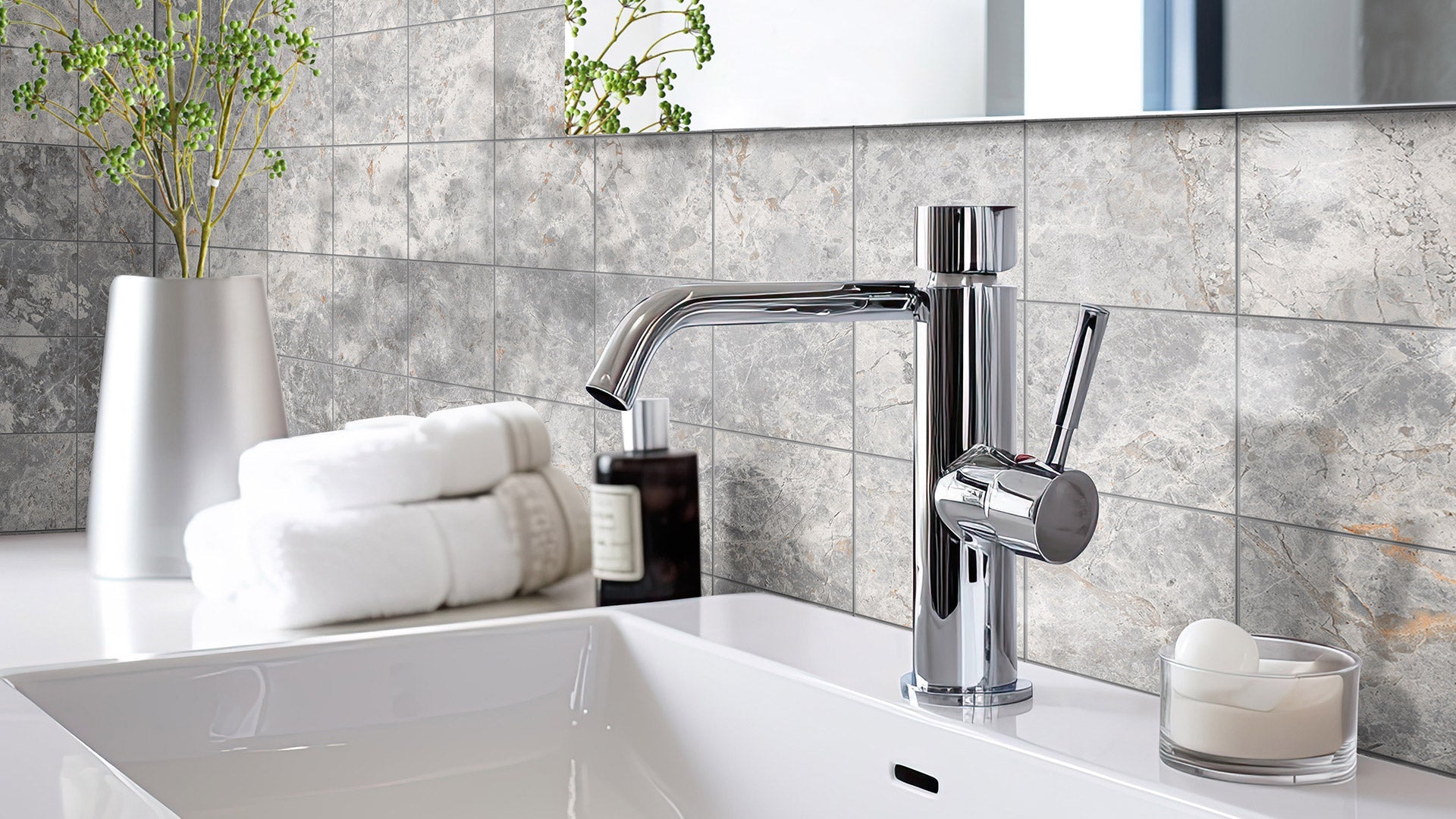
Clients and designers spend considerable time selecting the perfect tile — and then choose a grout colour in the final five minutes of a meeting. It's one of the most common mistakes in any tile installation, and the results are impossible to ignore once the work is done. Grout colour, width, and product type all have a significant impact on the finished appearance and long-term performance of a tiled surface.
Matching vs Contrasting Grout
The most important grout decision is whether to match or contrast. Matching grout, where the grout colour is close to the tile body, creates a seamless, unified surface and allows the tile design to dominate. Contrasting grout, particularly dark grout with light tiles, or white grout with dark tiles, draws attention to the individual tiles and the grid pattern. Neither approach is right or wrong; the decision depends on the desired aesthetic.
Grout Joint Width
The width of the grout joint is determined by the tile type, format, and application. Rectified tiles can accommodate joints as narrow as 1–2mm. Non-rectified tiles typically require a wider joint — 3mm or more — to accommodate natural size variation. Outdoor tiles and large format tiles may require even wider joints to allow for thermal movement. Always consult the tile technical data sheet for the manufacturer's recommended joint width.
Grout Product Type
Standard cement-based grout is suitable for most residential applications. Epoxy grout is harder, more stain-resistant, and better suited to commercial kitchens, swimming pools, and areas with heavy exposure to chemicals or moisture. It's also significantly more expensive and more difficult to work with, an experienced tiler is essential. For most residential bathroom and living area applications, a quality cement grout with a grout sealer applied post-installation will perform well.
Maintenance and Sealing
Grout is porous and will stain if left unsealed in bathrooms and kitchens. Apply a penetrating grout sealer after installation and reapply every 12–24 months depending on use. Epoxy grout is the exception, it doesn't require sealing. Keep grout joints clean with a pH-neutral cleaner and a soft brush; harsh chemicals can break down the grout surface over time.

Share:
How to Use Tiles to Define Zones in an Open-Plan Home
How to Specify the Right Tile Size for Any Room